Introduction
The global automotive aftermarket supports over 1.4 billion vehicles worldwide and has grown from a niche repair-parts segment into a $589 billion industry. Average vehicle age in the US reached 12.8 years in 2025, pushing steady demand for replacement components across every major vehicle system. Electrification and e-commerce distribution have since forced buyers to rethink how and where they source parts.
The choice of aftermarket parts manufacturer directly impacts vehicle uptime, total repair cost, and supply chain reliability—which makes supplier selection a strategic decision. Quality gaps between certified and uncertified suppliers can mean the difference between a 3-year service life and catastrophic field failures.
That risk is exactly what this guide addresses. It ranks 10 leading aftermarket automotive parts manufacturers by global market presence, product breadth, ISO/IATF certifications, and technology investment—so you can identify the right manufacturing partner for your sourcing requirements.
Key Takeaways
- The global automotive aftermarket is projected to reach $804.87 billion by 2030, driven by aging fleets and EV adoption
- Top manufacturers span Germany, Japan, South Korea, Canada, and the US, covering categories from electronics to seating systems
- Three US-based manufacturers make the top 10 — Dorman Products, BorgWarner, and Lear Corporation — relevant anchors for domestic sourcing strategies
- Key selection criteria include IATF 16949 certification, OEM client relationships, and electrification readiness
- Vetted sourcing partners can deliver 9–15% annualized cost savings through supplier qualification and negotiation leverage
Overview of the Aftermarket Automotive Parts Industry
Aftermarket automotive parts are components manufactured by independent suppliers (not the original vehicle maker) used for repair, replacement, or performance enhancement. Unlike OEM parts, aftermarket components typically offer broader availability, lower pricing, and faster delivery, though quality depends on manufacturer certifications and process controls.
The industry is experiencing rapid transformation. E-commerce penetration in automotive parts reached 20% in 2024 and is accelerating, with online channels reshaping distribution networks. The Asia-Pacific region is the fastest-growing market, driven by expanding vehicle fleets in India and Southeast Asia.
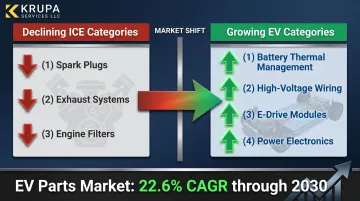
Electrification is creating demand for entirely new component categories. EV-specific parts and battery systems are projected to grow at 22.6% CAGR through 2030, pushing manufacturers to develop thermal management systems, high-voltage wiring, and e-drive components.
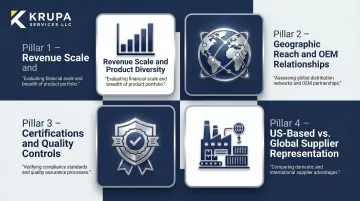
These market shifts shaped how the manufacturers below were evaluated. Selection was based on:
- Revenue scale and product diversity
- Geographic reach and OEM client relationships
- Depth of certifications and quality process controls
- Representation of both global Tier 1 suppliers and specialized US-based manufacturers
Top 10 Aftermarket Automotive Parts Manufacturers
Selection is based on global revenue, product specialization, OEM client base, manufacturing certifications, and demonstrated innovation in electrification and autonomous vehicle technologies.
Robert Bosch GmbH
Founded in 1886 and headquartered in Gerlingen, Germany, Bosch is the world's largest automotive supplier by revenue, delivering electronics, sensors, fuel systems, braking systems, and advanced driver-assistance components across virtually every major vehicle platform globally.
Bosch's integrated approach spans hardware and software development, positioning it as a Tier 1 supplier to nearly every global OEM. The company invests over €7 billion annually in R&D, with expansion into EV-compatible components—battery management systems, e-axles, and power electronics.
Its autonomous vehicle systems portfolio includes radar, LiDAR, and vehicle-to-cloud connectivity, reflecting the company's long-term bet on software-defined mobility.
| Attribute | Details |
|---|---|
| Founded / HQ | 1886 / Gerlingen, Germany |
| Core Product Categories | Ignition systems, ABS modules, fuel systems, sensors, EV components, battery management |
| Notable Clients / Certifications | Toyota, BMW, Ford, Mercedes-Benz; ISO 9001, IATF 16949 |
DENSO Corporation
Founded in 1949 and headquartered in Kariya, Japan, DENSO is a leading global supplier operating across 35+ countries, specializing in thermal management, powertrain control, electrification, and safety systems for passenger and commercial vehicles.
DENSO's differentiation lies in deep integration with Toyota's global supply chain and early, substantial investment in hybrid and electrification technologies. The company pioneered thermal management systems for EVs and supplies battery thermal control modules to major OEMs worldwide.
Its precision-engineered components—alternators, fuel pumps, AC compressors—are trusted in both OEM and aftermarket channels.
| Attribute | Details |
|---|---|
| Founded / HQ | 1949 / Kariya, Japan |
| Core Product Categories | AC systems, alternators, fuel pumps, sensors, hybrid/EV thermal systems, battery control modules |
| Notable Clients / Certifications | Toyota, Honda, Nissan, Ford; ISO 14001, IATF 16949 |
Continental AG
Founded in 1871 and headquartered in Hanover, Germany, Continental is a diversified automotive supplier covering tires, braking systems, powertrain electronics, advanced driver-assistance systems (ADAS), and vehicle connectivity solutions across 50+ countries.
Continental's dual strength in mechanical components (tires, hydraulic braking) and electronics (ADAS sensors, vehicle networking, domain controllers) makes it unique among Tier 1 suppliers. The company operates one of the industry's largest aftermarket distribution networks, with parts available in over 150 countries.
Its investments in software-defined vehicle architectures position Continental well for the shift toward centralized vehicle computing.
| Attribute | Details |
|---|---|
| Founded / HQ | 1871 / Hanover, Germany |
| Core Product Categories | Tires, brake systems, powertrain electronics, ADAS sensors, vehicle networking modules |
| Notable Clients / Certifications | Volkswagen, BMW, Ford, GM; ISO 9001, IATF 16949 |
ZF Friedrichshafen AG
Founded in 1915 and headquartered in Friedrichshafen, Germany, ZF is one of the world's largest driveline and chassis technology suppliers, serving passenger car and commercial vehicle manufacturers across 230+ global locations.
ZF's comprehensive portfolio spans 8-speed automatic transmissions, electric power steering, braking systems, and chassis modules. The company is scaling rapidly into electric drive systems—e-axles, integrated drive modules—and automated driving technologies including sensor fusion and vehicle motion control.
ZF's commercial vehicle expertise gives it particular strength in aftermarket channels serving heavy-duty fleets.
| Attribute | Details |
|---|---|
| Founded / HQ | 1915 / Friedrichshafen, Germany |
| Core Product Categories | Transmissions, steering systems, chassis modules, electric drivetrains, braking systems |
| Notable Clients / Certifications | Volkswagen, BMW, Mercedes-Benz, MAN; ISO 9001, IATF 16949 |
Magna International Inc.
Founded in 1957 and headquartered in Aurora, Ontario, Canada, Magna is one of the most diversified automotive suppliers globally, operating 340+ manufacturing facilities and 89 engineering centers spanning body, chassis, powertrain, and seating systems.
Magna's breadth of capabilities—from metal forming and casting to complete vehicle assembly—enables single-source partnerships across multiple vehicle systems. The company has secured major contracts for EV platforms, including battery enclosures and e-drive housings, and supplies complete body structures to Tesla, Ford, and GM.
This vertical integration reduces coordination costs for OEMs and aftermarket buyers sourcing across component categories.
| Attribute | Details |
|---|---|
| Founded / HQ | 1957 / Aurora, Ontario, Canada |
| Core Product Categories | Body structures, seating systems, drivetrain modules, ADAS components, EV battery enclosures |
| Notable Clients / Certifications | Ford, Tesla, Toyota, GM; ISO 9001, IATF 16949 |

Hyundai Mobis
Founded in 1977 and headquartered in Seoul, South Korea, Hyundai Mobis is the primary parts and service affiliate of the Hyundai Motor Group, supplying core modules—chassis, cockpit, front-end assemblies—as well as aftermarket parts across global markets.
Hyundai Mobis is expanding rapidly beyond the Hyundai/Kia ecosystem, securing over $9 billion in global orders from non-affiliated OEMs in 2024. The company invests heavily in autonomous vehicle components (LiDAR, radar, camera modules) and EV modules including integrated power electronics and high-voltage battery systems. Its integrated module assembly capability reduces part count and assembly complexity for vehicle manufacturers.
| Attribute | Details |
|---|---|
| Founded / HQ | 1977 / Seoul, South Korea |
| Core Product Categories | Chassis modules, cockpit assemblies, braking systems, EV power electronics, ADAS modules |
| Notable Clients / Certifications | Hyundai, Kia, expanding global OEM relationships; ISO 9001, IATF 16949 |
Aisin Corporation
Founded in 1949 and headquartered in Kariya City, Japan, Aisin is a major Tier 1 supplier within the Toyota Group ecosystem, specializing in driveline technology, chassis systems, and body components for passenger cars and commercial vehicles.
Aisin's differentiation stems from deep integration with Toyota Production System (TPS) principles, ensuring lean manufacturing and continuous improvement across all product lines. The company produces automatic transmissions used globally and is building out electrified powertrain components—e-axles, inverters, and motor-generators—for hybrid and EV platforms.
Its aftermarket product range covers over 100,000 SKUs, making it one of the broadest catalogs in the Tier 1 supplier space.
| Attribute | Details |
|---|---|
| Founded / HQ | 1949 / Kariya City, Aichi, Japan |
| Core Product Categories | Automatic transmissions, brake systems, engine components, EV drivetrains, e-axles |
| Notable Clients / Certifications | Toyota, Lexus, Honda; ISO 9001, IATF 16949 |
Dorman Products
Founded in 1918 and headquartered in Colmar, Pennsylvania, USA, Dorman Products is one of the most recognized US-based aftermarket parts brands, offering over 200,000 SKUs covering electrical, suspension, brake, and hardware components for cars, trucks, and SUVs.
Dorman's differentiation lies in proprietary, problem-solving replacement parts—not just copies of OEM components. Its OE FIX product line specifically addresses known OEM design flaws with re-engineered solutions that improve durability and serviceability.
The company maintains strong distribution through AutoZone, O'Reilly, and Advance Auto Parts, ensuring rapid availability across North America.
| Attribute | Details |
|---|---|
| Founded / HQ | 1918 / Colmar, Pennsylvania, USA |
| Core Product Categories | Electrical components, suspension parts, braking systems, steering assemblies, hardware and fasteners |
| Notable Clients / Certifications | AutoZone, O'Reilly, Advance Auto Parts; ISO 9001 certified manufacturing partners |
BorgWarner Inc.
Founded in 1928 and headquartered in Auburn Hills, Michigan, USA, BorgWarner is a US-based Tier 1 supplier specializing in propulsion technologies for conventional, hybrid, and electric vehicles, operating across 95+ facilities globally.
BorgWarner leads in turbocharging technology, supplying over 50% of global turbocharged engines, and has expanded into electrified propulsion—e-motors, inverters, onboard chargers, and high-voltage heaters for EVs.
Its thermal management systems for battery cooling make it a critical supplier for OEMs managing the ICE-to-EV transition. The aftermarket channel supplies remanufactured turbochargers and transmission components.
| Attribute | Details |
|---|---|
| Founded / HQ | 1928 / Auburn Hills, Michigan, USA |
| Core Product Categories | Turbochargers, transmission systems, e-drive modules, thermal management, onboard chargers |
| Notable Clients / Certifications | Ford, GM, Volkswagen, BMW; IATF 16949, ISO 14001 |
Lear Corporation
Founded in 1917 and headquartered in Southfield, Michigan, USA, Lear Corporation is a leading US-based automotive supplier focused on seating systems and electrical distribution architecture, operating across 35+ countries with 150,000+ employees.
Lear's integrated approach delivers complete seating subsystems—structures, foam, trim, climate control—and wiring architectures in a single supply relationship. The company invests heavily in smart seating technology (occupant sensing, massage functions) and high-voltage electrical systems for EVs, including battery disconnect units and charging infrastructure wiring.
Lear supplies nearly every major automotive OEM globally.
| Attribute | Details |
|---|---|
| Founded / HQ | 1917 / Southfield, Michigan, USA |
| Core Product Categories | Automotive seating systems, wiring harnesses, electrical distribution systems, EV high-voltage components |
| Notable Clients / Certifications | Ford, GM, BMW, Mercedes-Benz; ISO 9001, IATF 16949 |
How We Chose the Best Aftermarket Automotive Parts Manufacturers
This evaluation avoids ranking by brand name alone. Instead, it focuses on process capability, certifications, product range, and real-world OEM client relationships—the factors that determine long-term supply reliability and total cost of ownership.
Certifications and Quality Systems
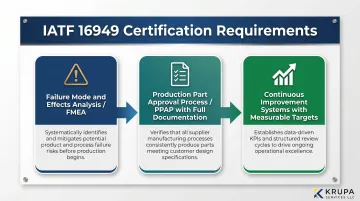
IATF 16949 and ISO 9001 indicate documented process controls, audit readiness, and dimensional consistency across high-volume programs. IATF 16949 is the automotive industry's highest quality management standard. Certified suppliers must demonstrate:
- Failure mode analysis (FMEA) across production processes
- Production part approval processes (PPAP) with full documentation
- Continuous improvement systems with measurable targets
Uncertified suppliers expose buyers to higher defect rates, warranty claims, and audit liability.
Product Range and Component Coverage
Broader SKU depth and cross-system expertise reduce the number of supplier relationships a procurement team must manage. Manufacturers offering both electrical and mechanical components—such as Bosch (sensors + braking) or Continental (tires + electronics)—lower coordination costs and simplify warranty administration when multiple parts fail simultaneously.
Technology Investment and Electrification Readiness
EVs are reshaping component demand. Traditional aftermarket staples—spark plugs, exhaust systems, engine filters—decline as EVs gain share, while new categories emerge: battery thermal management, high-voltage wiring, e-drive modules, and power electronics. Manufacturers investing heavily in R&D are better positioned to supply parts for next-generation vehicles. The EV parts market is projected to grow at 22.6% CAGR through 2030, so supplier R&D pipeline is worth evaluating before committing to long-term contracts.
After-Sales Support and Lead-Time Reliability
The best manufacturers back components with multi-year warranties and maintain global distribution infrastructure to minimize vehicle downtime. For fleet operators and repair shops, a 48-hour lead time can mean the difference between minor inconvenience and lost revenue. Procurement teams that pre-screen suppliers against these criteria consistently see better outcomes. Krupa Services supports that process through a network of 100+ vetted manufacturers and precision manufacturing expertise, delivering 9–15% annualized cost savings through improved supplier relationships and reduced risk exposure.
Conclusion
The top 10 manufacturers span multiple continents and specializations. The right partner for your procurement team depends on specific component requirements, volume commitments, geographic supply chain needs, and technology roadmap—especially for EV transitions. A German Tier 1 like Bosch or ZF may excel in electronics and transmissions, while a US-based supplier like Dorman or BorgWarner offers faster delivery and better support for North American fleets.
Don't default to the largest or most-recognized name. Scalability, process fit, audit history, and after-sales support often matter more than brand equity in long-term supply agreements. A mid-size specialist with IATF 16949 certification and dedicated account management can outperform a global giant with stretched resources.
If you're evaluating automotive parts sourcing strategies, Krupa Services offers precision manufacturing and global sourcing support backed by a vetted network of 100+ manufacturers. Services include supplier selection, PPAP support, and cost risk reduction through strategic sourcing and supplier qualification.
Reach out at support@krupa-services.com or +1 720-984-0932 to discuss your component needs.
Frequently Asked Questions
What are the top aftermarket auto parts manufacturers?
The globally recognized leaders include Robert Bosch (electronics and sensors), DENSO (thermal systems), Continental (tires and ADAS), ZF Friedrichshafen (transmissions and chassis), and Magna International (body structures and seating). The "best" manufacturer depends on specific part type, vehicle application, and geographic supply chain requirements.
Which aftermarket auto parts manufacturers are based in the US?
Major US-headquartered manufacturers include Dorman Products (Colmar, PA), BorgWarner (Auburn Hills, MI), and Lear Corporation (Southfield, MI). Global suppliers like ZF, Continental, and Magna also run large US facilities, offering local sourcing with shorter lead times.
What is the difference between OEM and aftermarket auto parts?
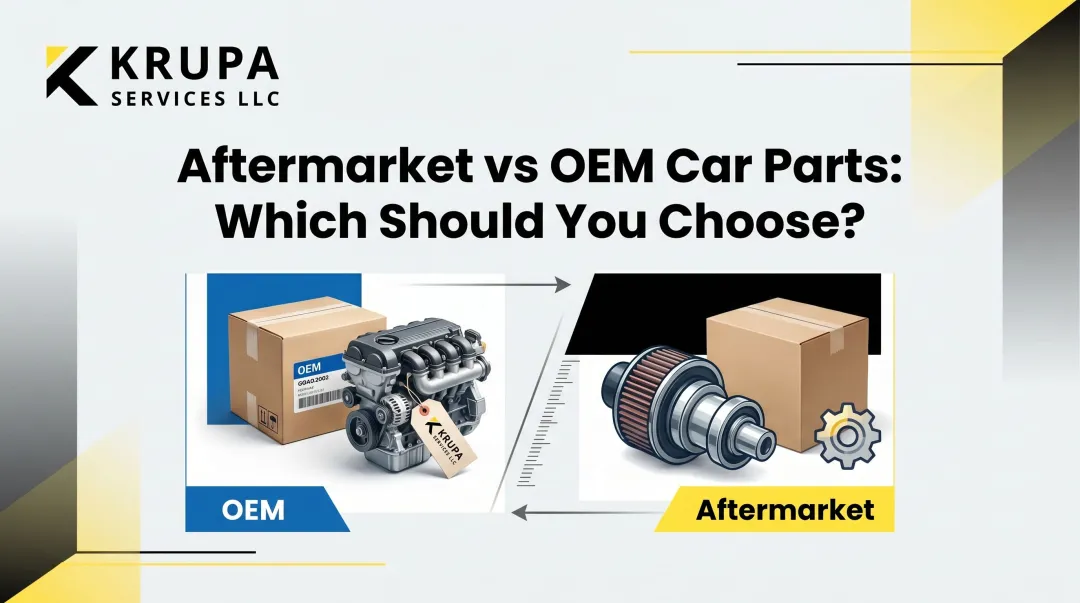
OEM parts are made by or for the original vehicle manufacturer and carry OEM branding and part numbers. Aftermarket parts are produced by independent manufacturers, often to the same specifications, and typically available at 20–40% lower cost with broader distribution channels and faster availability.
Are aftermarket parts as reliable as OEM parts?
Quality varies widely. Parts from IATF 16949 and ISO 9001 certified manufacturers that meet or exceed OEM specifications typically match OEM reliability and carry equivalent warranties. Uncertified or counterfeit parts carry a much higher failure risk and void vehicle warranties.
What certifications should I look for in an aftermarket parts manufacturer?
Look for IATF 16949 (automotive quality management), ISO 9001 (general quality systems), and ISO 14001 (environmental management). These certifications confirm structured process controls, audit readiness, and consistent output across production runs.
How do I choose the right aftermarket parts manufacturer for my business?
Evaluate process fit, certifications, SKU coverage, warranty terms, lead times, and references from comparable buyers. A sourcing partner like Krupa Services can pre-vet manufacturers, negotiate pricing at scale, and provide quality assurance support throughout the supply relationship.