
Introduction
Molten aluminum poured into a mold and left to solidify sounds simple. The engineering behind it isn't.
Aluminum castings let manufacturers produce lightweight, corrosion-resistant parts with geometries that machining or forging can't easily match. Engine manifolds, pump housings, and structural brackets all rely on this process.
Buyers face real decisions before the first part ships:
- Which alloy and casting method fit the application?
- How does tooling investment balance against production volume?
- What prevents porosity, shrinkage, or dimensional drift from ruining a batch?
This guide covers the casting process itself, the major methods available, typical applications, cost drivers, and what to look for in a supplier for US manufacturing projects.
Key Takeaways
- Match the process to the part: sand, die, investment, and permanent mold each fit different needs.
- Select the method by geometry, volume, tolerances, finish, and tooling budget.
- Control alloy and process to lock in strength, corrosion resistance, and lower defect risk.
- Get accurate quotes faster with CAD files, alloy specs, annual volume, and finishing needs upfront.
What Are Aluminum Castings?
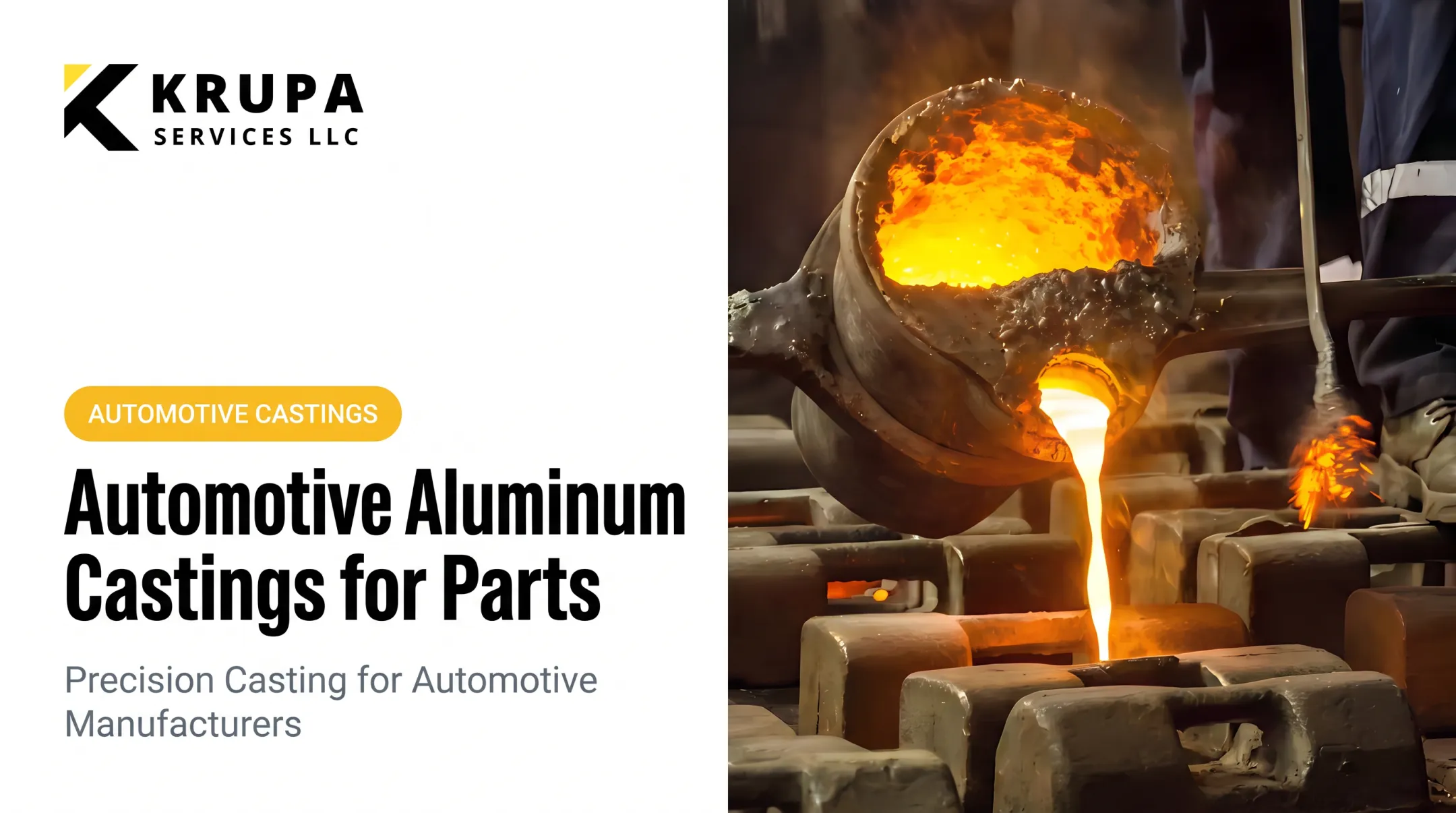
Aluminum castings form when molten aluminum alloy fills a mold cavity, solidifies, and is removed from the mold as a near-net-shape or semi-finished part. The mold defines the geometry; the alloy and cooling conditions define the properties.
Pure aluminum rarely gets cast. Casting alloys blend in silicon, magnesium, copper, zinc, iron, and manganese to improve fluidity, strength, and corrosion resistance. Silicon, for example, improves how well the metal flows into thin sections and complex cavities.
Why Manufacturers Choose Aluminum
Aluminum earns its spot in demanding applications for several reasons:
- Low density relative to steel or iron, reducing overall part weight
- High strength-to-weight ratio for structural components
- Corrosion resistance without heavy coatings in many environments
- Thermal and electrical conductivity for heat-management parts
- High recyclability, supporting sustainability goals
- Machinability for post-cast finishing operations
Cast vs. Wrought: Not the Same Alloy Family
Here's where confusion creeps in. "Cast aluminum" describes a manufacturing route, not one grade or performance tier. Properties vary by alloy, mold design, solidification rate, and heat treatment.
Cast and wrought aluminum use entirely different designation systems. ASM International classifies aluminum alloys into wrought non-heat-treatable, wrought heat-treatable, and separate casting alloy families. 6061, for instance, is a wrought, heat-treatable 6xxx-series Al-Mg-Si alloy — it's typically supplied as extrusion, plate, bar, or forging, not as a cast product.
The 3xx.x series (like 356.0 or A356.0) represents the major cast-alloy family, built around aluminum-silicon chemistry. If a project spec calls out "6061" for a casting, that's worth double-checking with the supplier before tooling gets cut.
That material check is part of good casting practice. Krupa Services matches aluminum and other non-ferrous casting alloys—along with carbon, alloy, and stainless steel—to each part's mechanical and environmental requirements.
How the Aluminum Casting Process Works
Every casting project follows a similar sequence, though the details shift by method.
The typical flow looks like this:
- Engineering review and pattern or die development
- Alloy preparation and melting
- Mold filling under gravity, pressure, or vacuum
- Solidification and cooling
- Part removal, trimming, and gate/riser cutoff
- Heat treatment (where specified)
- Machining, finishing, and inspection

Mold Design and Melt Prep Control Outcomes
Gating, risers, vents, cores, and draft angles aren't afterthoughts. The American Foundry Society notes that gating design directly affects casting quality and yield, governing how metal flows and where shrinkage gets managed. Poor gating shows up later as porosity or incomplete fill.
Before metal ever reaches the mold, foundries verify alloy chemistry, control pouring temperature, and treat the melt. ASM International documents fluxing, degassing, and filtration as standard molten-metal treatments: steps that remove dissolved hydrogen and non-metallic inclusions before they become defects.
Common Defect Mechanisms
Aluminum casting soundness depends heavily on controlling a handful of recurring issues:
- Gas porosity — dissolved hydrogen coming out of solution during solidification
- Shrinkage porosity — volume contraction as metal cools
- Inclusions — trapped oxides or foreign material
- Cold shuts and misruns — incomplete fusion or fill
- Hot tearing — cracking during solidification under thermal stress
- Dimensional variation — mold wear, thermal contraction, or handling
ASM research confirms porosity and inclusions are the two factors most strongly tied to mechanical property loss in aluminum castings. Simulation software, tighter mold design, and post-cast inspection (X-ray, ultrasonic, or CMM) all reduce this risk before parts reach a customer.
Regulated buyers still need the paper trail. Aerospace, automotive, and pressure-containing components often require documented melt certificates, heat-treat records, and inspection data, not just a finished part that "looks right."
Types of Aluminum Casting Methods
No single casting process wins every job. The right choice depends on part geometry, volume, required tolerances, surface finish, and how much tooling investment the project can absorb.
Sand Casting
Sand casting remains the go-to for large parts, prototypes, and lower-to-medium production runs. The Aluminum Association notes that sand casting is usually more economical for small quantities, intricate designs, or very large castings, though it runs slower than die or permanent mold methods.
Tooling stays flexible and cheap to modify. Surface finish and dimensional accuracy trail behind die casting, so expect some machining afterward.
Die Casting
High-pressure die casting forces molten aluminum into a reusable steel die under pressure. It's built for high-volume parts with thin walls and fine detail, delivering strong repeatability and short cycle times.
The tradeoff: die tooling costs run high, and part size has practical limits. Die wash (steel erosion from repeated injection cycles) and porosity control both factor into long-term tooling life.
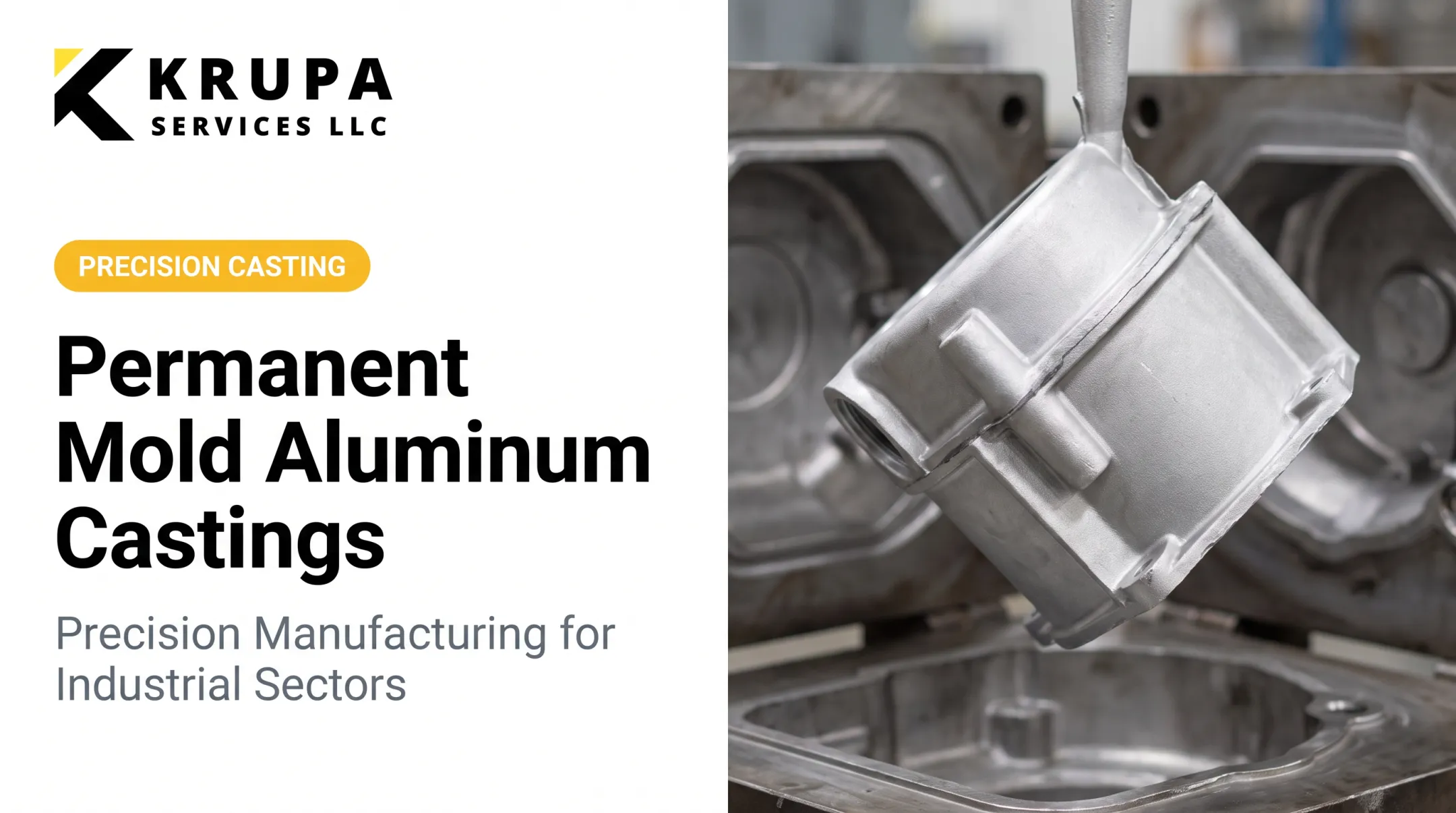
Permanent Mold and Gravity Casting
Reusable metal molds offer better repeatability and finish than most sand-casting applications, at a higher tooling cost. The Aluminum Association notes permanent-mold castings can achieve greater strength than comparable die or sand castings. That tradeoff matters when structural performance outweighs piece price.
Investment Casting
Lost-wax investment casting handles intricate shapes and fine details that other methods struggle with. It suits smaller quantities or higher-value components where geometry complexity justifies the tooling and finishing investment.
Krupa Services offers investment casting for automotive, powertrain, pump body, oil and gas, aerospace, and mining/aggregate components — applications where precision geometry and material integrity both matter.
Other Specialized Methods
A few additional processes solve narrower problems:
- Vacuum-assisted casting — reduces porosity in critical sections
- Lost-foam casting — intricate patterns without a permanent mold
- Centrifugal casting — rotational geometries like cylindrical parts
- Plaster or ceramic mold casting — fine surface detail for lower-volume runs
- Low-pressure casting — controlled fill for quality-sensitive parts

Comparing the Methods
| Method | Typical Volume | Tooling Cost | Finish/Tolerance | Common Use Case |
|---|---|---|---|---|
| Sand | Low-medium | Low | Moderate; machining often needed | Large parts, prototypes |
| Die | High | High | Excellent; minimal finishing | Thin-wall, high-volume parts |
| Permanent Mold | Medium-high | Medium-high | Good finish; tight repeatability | Structural, mid-volume parts |
| Investment | Low-medium | Medium | Excellent detail | Complex geometry, small runs |
Benefits, Limitations, and Applications
Aluminum castings show up across industries because they solve specific engineering problems in one integrated shape.
Core benefits:
- Reduce weight while holding structural performance
- Resist corrosion in harsh operating environments
- Manage heat through conductivity and complex internal passages
- Consolidate parts to cut fasteners, joints, and tolerance stack-up
Where you'll find them:
- Engine manifolds and powertrain components (automotive)
- Pump bodies and impeller wheels (industrial machinery)
- Housing and bracket assemblies (renewable energy, oil and gas)
- Structural supports and gearbox cases (mining and construction)
- Turbine blade components (power generation)
Krupa Services' cast components support structural automotive, powertrain, pump-body, oil-and-gas, aerospace, and mining-and-aggregate applications. In these sectors, weight savings and corrosion performance directly affect operating cost.
Where Casting Falls Short
Casting isn't the answer for every application. Watch for these constraints:
- Porosity risk limits use in high-fatigue or pressure-critical zones without extra inspection
- Elevated-temperature performance trails wrought alloys in some grades
- Bearing surfaces may need coatings or secondary hardening
- Cyclic loading requires careful design margin, not just material substitution
When parts face heavy impact loads, tight tolerances beyond casting capability, or very high-cycle fatigue, forging, extrusion, or machining from billet often makes more sense.
The Sustainability Angle
Aluminum's recyclability isn't marketing spin. The International Aluminium Institute reports that recycling saves 95% of the energy required for primary aluminum production, based on 2019 primary energy figures. The Aluminum Association separately notes that nearly 75% of all aluminum ever produced remains in use today.
For buyers weighing lifecycle impact, recycled-content availability and remelt efficiency matter as much as the transportation savings from a lighter part.
How Much Do Aluminum Castings Cost?
There's no universal price per pound for aluminum castings. Cost depends on the project, and it adds up across several categories:
- Material and alloy premium
- Pattern or tooling development
- Melting, casting, and labor
- Trimming, heat treatment, and machining
- Finishing, inspection, and packaging
- Freight and supplier-management overhead
Volume Drives Tooling Strategy
Low-volume work usually favors flexible tooling (sand casting patterns) even though per-part cost runs higher. High-volume production can justify permanent steel dies, spreading that upfront cost across thousands of parts.
NADCA notes that high-precision die-casting tooling ranks among the highest-cost tooling categories in high-volume manufacturing. Complexity, die wear from repeated thermal cycling, and thick sections all push that cost upward, though design simplification can bring it back down.

What Pushes Cost Up (or Down)
Design factors that increase cost:
- Cores and slides for undercuts
- Thin sections requiring tighter process control
- Tight tolerances demanding secondary machining
- Complex gating requiring simulation work
Material factors to watch:
- Alloy availability and market pricing
- Certification or traceability requirements
- Recycled-content specifications
- Melt loss during processing
Getting an Accurate Quote
Submit these details for a meaningful quote instead of a rough guess:
- 3D model and 2D drawing with critical dimensions flagged
- Alloy or material specification
- Expected annual and batch volumes
- Tolerance and surface-finish requirements
- Testing and inspection expectations
- Delivery schedule and destination
Krupa Services typically responds to RFQs within one business day and offers technical consultation by phone or email to clarify specs before quoting. When casting sits alongside CNC machining, fabrication, welding assembly, or multi-supplier coordination, one review process covers those needs instead of separate vendor negotiations.
Design and Supplier Considerations
Good casting design starts long before the first mold gets cut. A few principles keep parts manufacturable and consistent:
- Maintain uniform wall sections — abrupt thickness changes invite shrinkage defects
- Use generous radii and fillets — sharp corners create stress concentrations and mold-fill issues
- Include proper draft — NADCA notes draft requirements vary by wall depth, surface type, and alloy
- Position parting lines thoughtfully — affects both mold complexity and finish quality
- Design cores and openings carefully — supports reliable, repeatable mold production
Before Release to Production
Identify these items on the drawing, not after the fact:
- Machining datums and stock allowances
- Threaded features and sealing surfaces
- Critical tolerances requiring dimensional inspection
- Areas needing leak or pressure testing
The Aluminum Association's Standards for Aluminum Sand and Permanent Mold Castings (16th edition) recommends calling out tighter feature requirements separately on the print. Sealing surfaces, high-stress zones, and pressure-test areas should not rely on default tolerances.
Evaluating a Casting Supplier
A supplier checklist worth running through:
| Category | What to Verify |
|---|---|
| Process capability | Demonstrated experience with your specific method and alloy |
| Quality controls | Defect-prevention systems, inspection equipment, traceability |
| Tooling management | Pattern/die ownership terms, maintenance responsibility |
| Finishing capacity | In-house machining, heat treatment, surface finishing |
| Logistics | Lead times, minimum order quantities, packaging standards |
Total landed cost matters more than piece price alone. Factor in tooling ownership terms, rework risk from quality escapes, delivery reliability, and engineering support during design for manufacturability (DFM) review.
Krupa Services works through a network of 100+ vetted manufacturers, giving projects capacity flexibility without sacrificing the quality documentation automotive, renewable energy, and mining customers typically require.
Early prototype validation before production tooling remains the cheapest insurance against costly redesigns later.
Frequently Asked Questions
How much does it cost to cast aluminum?
Cost depends on alloy, casting method, part size and complexity, tooling, quantity, and finishing requirements. Submit drawings, CAD files, volumes, and specifications to get a meaningful quote rather than a generic estimate.
Is 6061 aluminum wrought or cast?
6061 is primarily a wrought aluminum alloy, commonly supplied as extrusion, plate, bar, or forging. A part shaped like a 6061 component shouldn't automatically be treated as a conventional cast part. Confirm the required product form with your supplier.
What is the best aluminum casting method?
It depends on part geometry, production volume, tolerances, finish, and tooling budget. Die casting suits high-volume thin-wall parts; sand casting fits large or low-volume runs; investment casting handles fine detail; permanent mold balances the two.
What is the difference between cast and wrought aluminum?
Casting solidifies molten metal directly into shape, while wrought aluminum gets mechanically worked through rolling, extrusion, or forging. This difference affects grain structure, design freedom, and typical strength-to-ductility tradeoffs.
What are the most common defects in aluminum castings?
Porosity (gas and shrinkage), inclusions, cold shuts, misruns, hot tears, and dimensional distortion are the most frequent. Melt control, mold design, process simulation, and inspection all help manage that risk before parts ship.