
Introduction
A single porous valve body can shut down an entire process line.
In oil and gas, power generation, water treatment, chemical processing, mining, and manufacturing, that failure means lost production, safety risk, and unplanned maintenance costs that dwarf the original part price.
The "best" industrial valve casting isn't about brand recognition. It depends on matching material, pressure and temperature ratings, valve design, casting process, and inspection rigor to the actual service conditions.
This guide reviews five manufacturers commonly evaluated for U.S. valve-casting projects and the criteria engineers and procurement teams should verify before requesting samples, quotes, or production approval.
Key Takeaways
- Casting method (sand, investment, centrifugal, or permanent-mold) must match geometry, alloy, and volume—not preference alone
- Select cast vs. forged valves by pressure, temperature, and cost; neither wins by default
- Prioritize suppliers with documented traceability, NDE, hydrotesting, and spec compliance
- Verify supplier location, certifications, and capacity before you commit
Overview of Industrial Valve Castings in the U.S. Market
An industrial valve casting is a pressure-containing component such as a body, bonnet, cover, or housing. It is formed by pouring molten metal into a mold, then machined and inspected to spec. These parts handle flow isolation, throttling, pressure control, and backflow prevention across U.S. oil and gas, chemical processing, water systems, power plants, mining operations, and heavy equipment.
What Drives Casting Selection
Several variables determine which process and alloy fit a given valve:
- Operating pressure and temperature: dictate wall thickness and material grade
- Fluid chemistry: corrosive or abrasive media narrow the alloy options fast
- Component size and internal geometry: complex passages favor investment casting; large bodies often need sand casting
- Production quantity: tooling costs only make sense at certain volumes
- Machining allowance: how much stock the casting needs for finish machining
- Applicable standards: API, ASME, and ASTM requirements often set material, testing, and inspection criteria
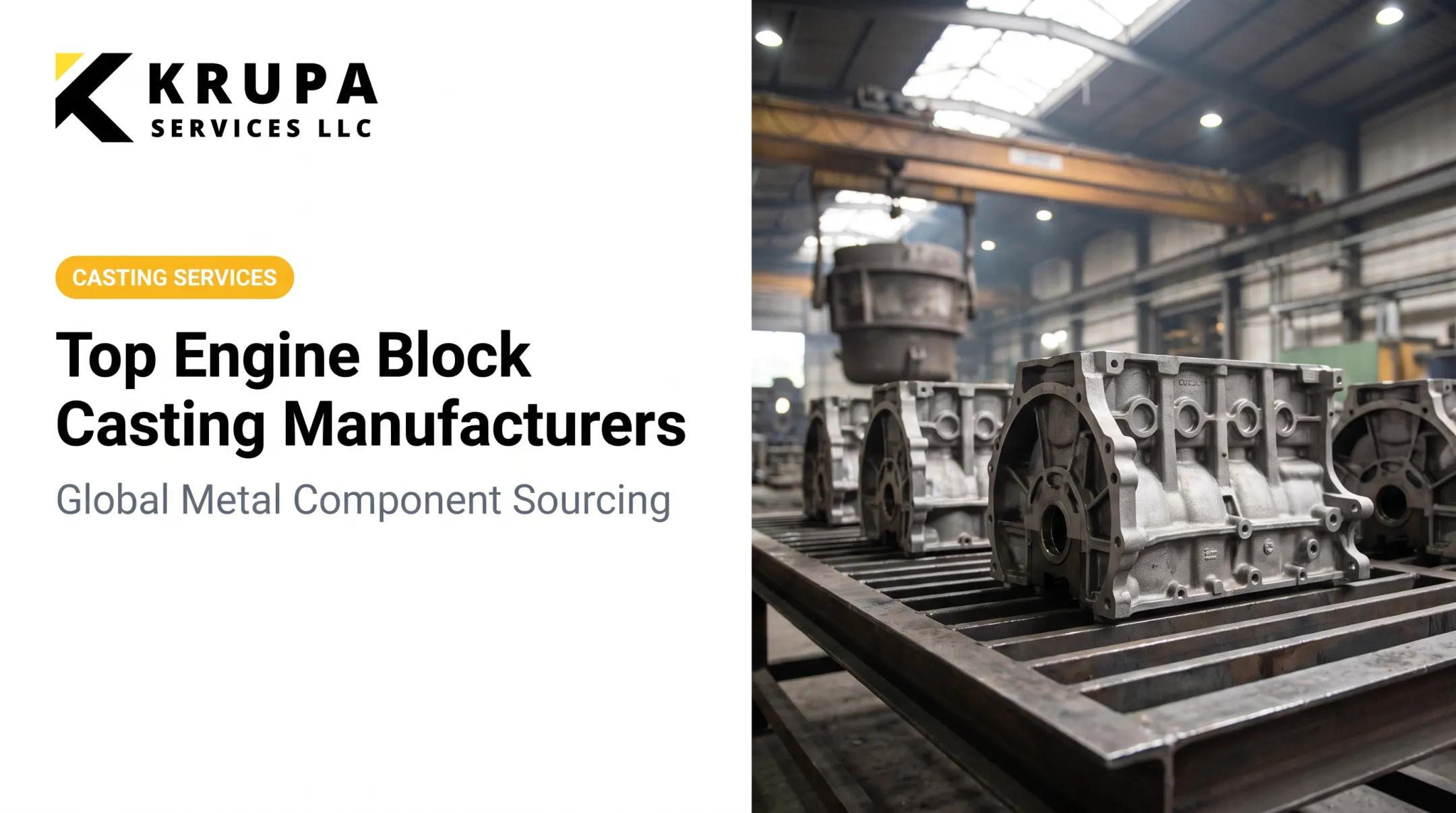
Bodies, bonnets, and caps are typically produced through casting or forging. Sand and investment casting remain the two primary routes for valve components, according to Valve Magazine's primer on castings.
Casting Supplier vs. Complete Valve Manufacturer
Not every company on a shortlist does the same job. Some are pure foundries supplying raw castings. Others machine and finish components. A few, like Flowserve, sell complete finished valves.
Krupa Services runs a hybrid model. Its casting capabilities support investment and sand processes across carbon, alloy, and stainless steel for oil and gas and mining/aggregate applications, with inspection and sampling before shipment. That distinction matters because a raw-casting supplier and a finished-valve OEM carry very different scopes of responsibility.

Verify each supplier's current capabilities, applicable standards, and delivery model before treating any name on a list as a default choice.
Top Industrial Valve Casting Manufacturers for U.S. Buyers
This is a research-based shortlist, not a strict ranking. Fit should reflect foundry capability, valve-industry experience, material range, quality controls, and project scale, not name recognition alone.
| Company | Casting Scope | Location Model | Best Fit For |
|---|---|---|---|
| MetalTek International | Sand, investment, centrifugal castings for pump/valve markets | U.S. facilities (WI, MO, OH) | Complex, demanding U.S. programs |
| Waukesha Foundry | 200+ alloys, 1 to 6,000+ lb castings | U.S. facility (Waukesha, WI) | Large, complex components |
| Austin Alloy Cast | Investment/lost-wax valve and pump components | India-based, exports globally | Intricate smaller parts, cost-driven volume |
| Kormax | Sand, investment, shell-sand valve castings | U.S. support, foundry-partner network | DFM support with sourced production |
| Flowserve | Finished cast/forged valves (Edward, Anchor/Darling) | Certified U.S. facilities | Integrated valve OEM, aftermarket |
MetalTek International
MetalTek notes pump and valve markets among its supported industries, alongside oil and gas, petrochemical, mining, and energy. It operates U.S. facilities in Wisconsin, Missouri, and Ohio.
The company cites support for 450+ alloy grades, with processes spanning sand, investment, centrifugal, and vacuum centrifugal casting.
Inspection resources include:
- Liquid and fluorescent penetrant testing
- Radiography, hydrostatic, and eddy current testing
- Magnetic particle and CMM/layout inspection
Listed approvals include ASME QSC-525, ASNT Level II/III, ISO 9001:2008, and Lloyd's Register approval for copper-alloy valve castings.
Buyer fit: MetalTek suits technically demanding programs where alloy breadth and documented nondestructive testing (NDE) matter more than fast, low-cost turnaround. Confirm part size, alloy grade, and machining scope in quotation. The alloy guide does not mean every listed process applies to every valve component.

Waukesha Foundry
Waukesha's official pages list Pump & Valves and petrochemical fittings among supported product lines, with production based in Waukesha, Wisconsin. The foundry casts more than 200 alloys from 1 lb to over 6,000 lb.
Molding routes include chemically bonded sand, patternless, and FoamCast methods.
Secondary services include:
- Pattern and machine shop support
- Rough and finish machining
- Grinding, polishing, welding, and assembly
Quality controls cover ISO 9001:2015, plus radiography, magnetic particle, dye penetrant, and visual inspection.
Buyer fit: Waukesha fits large, complex castings that need in-house secondary processing. Public materials do not confirm specific valve standards or heat-treatment capability, so verify those points per project.
Austin Alloy Cast
Austin Alloy Cast operates from Rajkot, Gujarat, India, and exports to more than 40 countries. It covers valve, pump, chemical processing, refining, and marine work in stainless, alloy, duplex, super-duplex, and nickel-based alloys through investment casting.
Documented NDT methods include dye penetrant, magnetic particle, radiography, ultrasonic testing, and spectrometric analysis. Named approvals include ISO 14001, PED, NORSOK M-630, DNV, ABS, and Lloyd's Register.
Buyer fit: This is an overseas sourcing option, not a U.S. producer. No U.S. manufacturing facility is confirmed. Investment casting suits intricate geometries and repeatable smaller parts with less machining.
- Verify import documentation, freight timelines, and customs handling upfront
- Confirm inspection hold points before parts ship internationally
- Expect longer lead times than domestic options on urgent orders
Kormax
Kormax covers industrial castings for valves, pumps, turbines, and pressure-containing parts, including complex stainless-steel valve bodies made by investment casting. It coordinates production through approved foundry partners and provides U.S. engineering and commercial support.
Supported processes include sand, investment, and shell-sand casting in cast iron, carbon and alloy steels, and stainless steels, with design-for-manufacturing input and machining.
Buyer fit: Kormax fits buyers who want engineering coordination with sourced production. It is described as New Zealand-owned with U.S. support. Evidence does not confirm owned U.S. foundries, so treat it as a sourcing and DFM partner rather than a domestic mill.
Flowserve
Flowserve's power industry catalog identifies Edward and Anchor/Darling gate, globe, and check valves. Certified facilities manufacture forged and cast-steel valves in carbon steel, austenitic stainless, duplex, and gray cast iron with linings.
The brochure cites ISO 9000, QME-1, N Stamp, and CE certifications, plus aftermarket support through rebuilds, field repair, and Quick Response Centers.
Buyer fit: Flowserve is a finished-valve product line, not a standalone raw-casting supplier. Choose it when you need a complete valve with lifecycle service and aftermarket support, not bare castings for your own assembly.
How We Chose the Best Industrial Valve Castings
We started by confirming each candidate has a relevant, verifiable casting or valve capability. Placement then followed four pillars: technical fit, quality assurance, manufacturing depth, and commercial suitability.
Material and Application Fit
Alloy choice must match corrosion resistance, temperature, pressure, erosion exposure, weldability, and required mechanical properties. Cast iron, ductile iron, carbon steel, stainless steel, duplex steel, nickel alloys, and bronze are not interchangeable.
Brittle cast irons generally suit lower pressures — particularly below 300 psi — where water hammer isn't a concern, while higher pressures call for stronger, more ductile steel and high-alloy grades, according to Valve Magazine's guide to valve materials. Treat that figure as a starting point only—always verify the valve's rated pressure-temperature curve for your service.

Casting Process and Design Capability
Sand, investment, centrifugal, and permanent-mold processes differ by component size, internal geometry, dimensional accuracy, and tooling cost. Evaluate suppliers on:
- Design-for-manufacturing (DFM) review before tooling commitment
- Pattern or tooling development timelines and costs
- Heat treatment capability matched to alloy requirements
- Welding repair processes for minor casting defects
- Precision machining to finish critical dimensions
Quality, Standards, and Inspection
Match standards to the specific valve and service—don't accept a listing just because it appears on a supplier's website. ASME B16.34 is the common reference for pressure-temperature ratings, dimensions, materials, NDE, and testing on cast, forged, and fabricated valves in new construction.
Inspection methods serve different purposes:
- Radiography — evaluates internal (volumetric) soundness
- Dye penetrant — detects surface discontinuities
- Magnetic particle — catches surface and near-surface flaws
- Hydrostatic testing — confirms pressure-boundary integrity
Commercial and Supplier-Risk Review
Low unit price rarely tells the whole story. Compare total cost of ownership by weighing:
- Tooling and machining charges beyond the base casting price
- Freight and import exposure for overseas suppliers
- Minimum order quantities relative to your actual need
- Lead time against your project schedule
- Replacement part availability for future maintenance cycles
Don't select a supplier on price or website polish alone. Ask for sample inspection reports, references, and corrective-action history before committing production volume.
Conclusion
The best industrial valve casting matches your service conditions: pressure class, temperature, fluid chemistry, and required documentation. Brand name and the lowest quote matter less than fit for service.
Before selecting a partner, issue a detailed technical inquiry covering:
- Drawings and alloy specification
- Pressure class and operating conditions
- Applicable standards and inspection plan
- Quantity and delivery expectations
That single step filters out mismatched suppliers faster than any brand comparison.
If your project needs broader metal-component manufacturing, machining, fabrication, or global sourcing support beyond a single casting, Krupa Services works across stamping, CNC machining, fabrication, welding assembly, and casting through a 100+ plant manufacturing network.
Reach the team at support@krupa-services.com or +1 720-984-0932 to discuss project requirements. Krupa Services is a manufacturing and sourcing partner for related component needs, not a certified valve foundry.
Frequently Asked Questions
What are the main types of casting used in valve casting?
Sand casting suits large or complex shapes with internal passages, while investment casting handles tighter geometries and smaller-to-moderate parts with less machining. Centrifugal casting works well for hollow, high-soundness components, and permanent-mold or die casting are less common for large steel valve bodies.
What are the differences between cast and forged valves?
Forging reduces surface porosity and closes internal voids, improving ductility and tensile strength, while casting allows more complex shapes and larger sizes at lower tooling cost. Some ultrasupercritical applications above 1112°F rely on forged grades with no direct cast equivalent. Selection depends on service conditions, not a universal ranking.
How difficult is it to cast steel?
Steel casting involves managing shrinkage porosity, gas defects, and inclusions through careful mold design and thermal control. Heat treatment and inspection afterward are essential to catch defects before the part reaches service.
What are the four types of valves?
Gate, globe, ball, and butterfly valves are commonly cited as core categories, covering isolation and throttling functions. Check, plug, diaphragm, control, and specialty valves are also widely used depending on the application.
What is a cast iron valve?
A cast iron valve uses a cast-iron body, typically suited to lower-pressure applications below 300 psi where water hammer isn't a concern. Its brittleness limits use in high-pressure or high-shock service. Always verify against the applicable specification.
What does a valve body do?
The valve body forms the primary pressure boundary, directing fluid through the internal flow path while housing the closure mechanism. It also connects directly to the piping system, bearing structural loads from both the process and the pipeline.