
Buyers sourcing cast parts face a tough balancing act. You need the right combination of part complexity, production volume, tolerances, material performance, cost, and delivery reliability. Get one variable wrong, and you're stuck with scrapped tooling or missed deadlines.
This guide breaks down what casting plants actually do, walks through the production workflow step by step, compares the major casting methods, and covers the quality and safety practices that separate reliable suppliers from risky ones. We'll close with a practical checklist for evaluating a casting factory before you commit to a production run.
Key Takeaways
- Casting plants melt and mold metal; factories cover any manufacturing site, including cast parts.
- Match casting method to material, geometry, tolerances, finish, and volume—not unit cost alone.
- Prioritize suppliers with quality docs, traceability, and secondary-operation capacity.
- Treat machining, heat treatment, and coating as equal in impact to the casting itself.
Casting Plants and Factories: What They Are
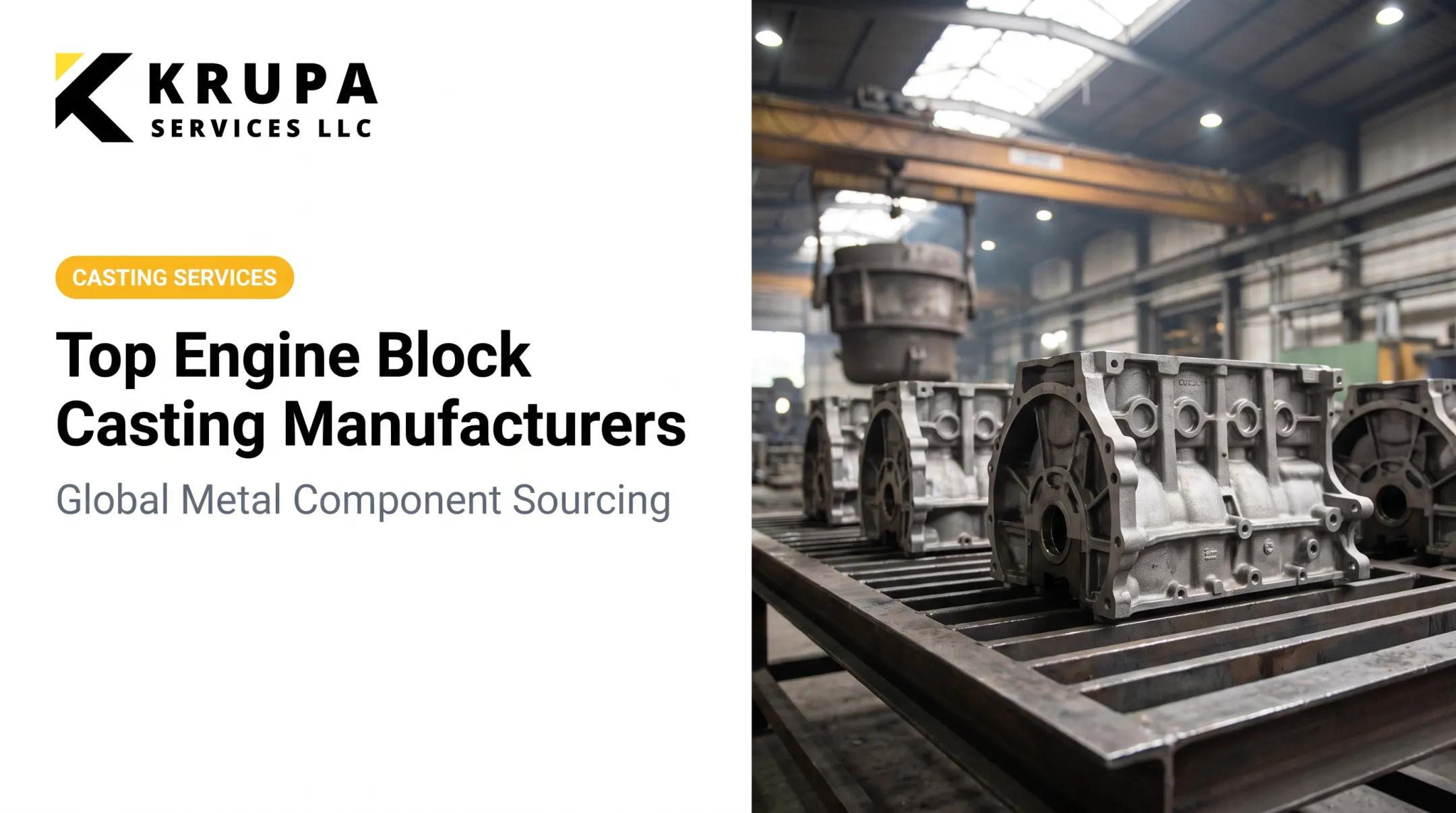
A casting plant or foundry is a facility whose main job is melting metal and forming it inside a mold. A factory is a broader term that can cover cast parts or many other products. For buyers, the distinction matters: a foundry's core competency is metalcasting, while a factory may add casting to machining, fabrication, or assembly.
Some facilities specialize narrowly: one metal, one process, one part family. Others run casting alongside machining, fabrication, heat treatment, coating, assembly, and packaging under one roof or a coordinated network.
Industries That Depend on Cast Components
Castings show up almost everywhere metal parts are needed. The AFS notes that castings support nearly all manufacturing machinery, with heavy reliance across:
- Automotive powertrain and structural parts
- Construction and infrastructure equipment
- Agricultural machinery
- Mining and crushing components (housings, wear parts, structural elements)
- Industrial machinery
- Renewable energy systems, including wind turbine components
- Oil and gas field equipment
- Home appliances
Krupa Services supports several of these categories with casting and related metal component work for automotive, industrial machinery, renewable energy, and other equipment programs. Parts are inspected and sampled before shipment so buyers can verify fit, finish, and dimensional requirements.
Why Plant Layout Matters
How a plant is organized affects more than aesthetics. Layout drives:
- Faster throughput from pour to shipment
- Tighter contamination control around sand, dust, and debris
- Clearer paths for worker safety near molten metal and heavy molds
- More consistent lead times with fewer floor bottlenecks
A cluttered, poorly sequenced plant floor shows up downstream as inconsistent part quality.
What Happens Inside a Casting Plant?
Every casting job starts with a drawing, spec sheet, or digital model—and ends with an inspected, ship-ready part. Most plants move the job through the same core stages.
Design Review and Pattern Preparation
Before metal ever gets poured, engineers lock down the job requirements:
- Alloy and material specs
- Part geometry and expected quantities
- Tooling needs, tolerances, and inspection criteria
Mold and core prep starts here too. Internal cavities, undercuts, draft angles, gating, risers, and venting all get designed in at this stage. Skip it, and defects get baked in before production even starts.
Melting and Pouring
Melting and pouring follow a defined sequence: charge preparation, temperature management, cleanliness checks, and timing. An approved, repeatable process here is what keeps heat after heat consistent instead of leaving quality to chance.
Solidification, Cooling, and Shakeout
Once poured, the casting solidifies inside the mold, then continues cooling after shakeout. Poorly controlled conditions during this phase can produce:
- Shrinkage porosity
- Gas porosity from hydrogen or trapped air
- Cracks, hot tears, or cold shuts
- Nonmetallic inclusions
- Dimensional distortion
After solidification, the mold is vibrated to remove sand, and any remaining material gets cleaned off—often through abrasive blasting.
Finishing and Secondary Operations
Gates and risers get cut away, flash gets removed, and the part moves into whatever secondary work the spec calls for:
- Heat treatment to adjust hardness or strength
- Shot blasting for surface cleanup
- Machining for tight-tolerance features
- Coating for corrosion resistance
- Assembly and packaging for shipment
Coating is matched to the operating environment, not applied by default. Krupa Services, for example, applies nickel plating to some investment-cast brackets when corrosion resistance and durability are required in service.

The Main Types of Casting
Method selection comes down to part size, design complexity, alloy, tolerance, surface finish, production volume, tooling cost, and service conditions. Three processes dominate most sourcing conversations.
Sand Casting
Sand casting uses a sand-based mold shaped by a pattern and, where needed, cores for internal features. It handles nearly every major metal: iron, aluminum, magnesium, zinc, steel, and copper alloys. It's flexible for large or complex shapes but typically trades off some surface finish and dimensional precision compared to other methods.
Die Casting
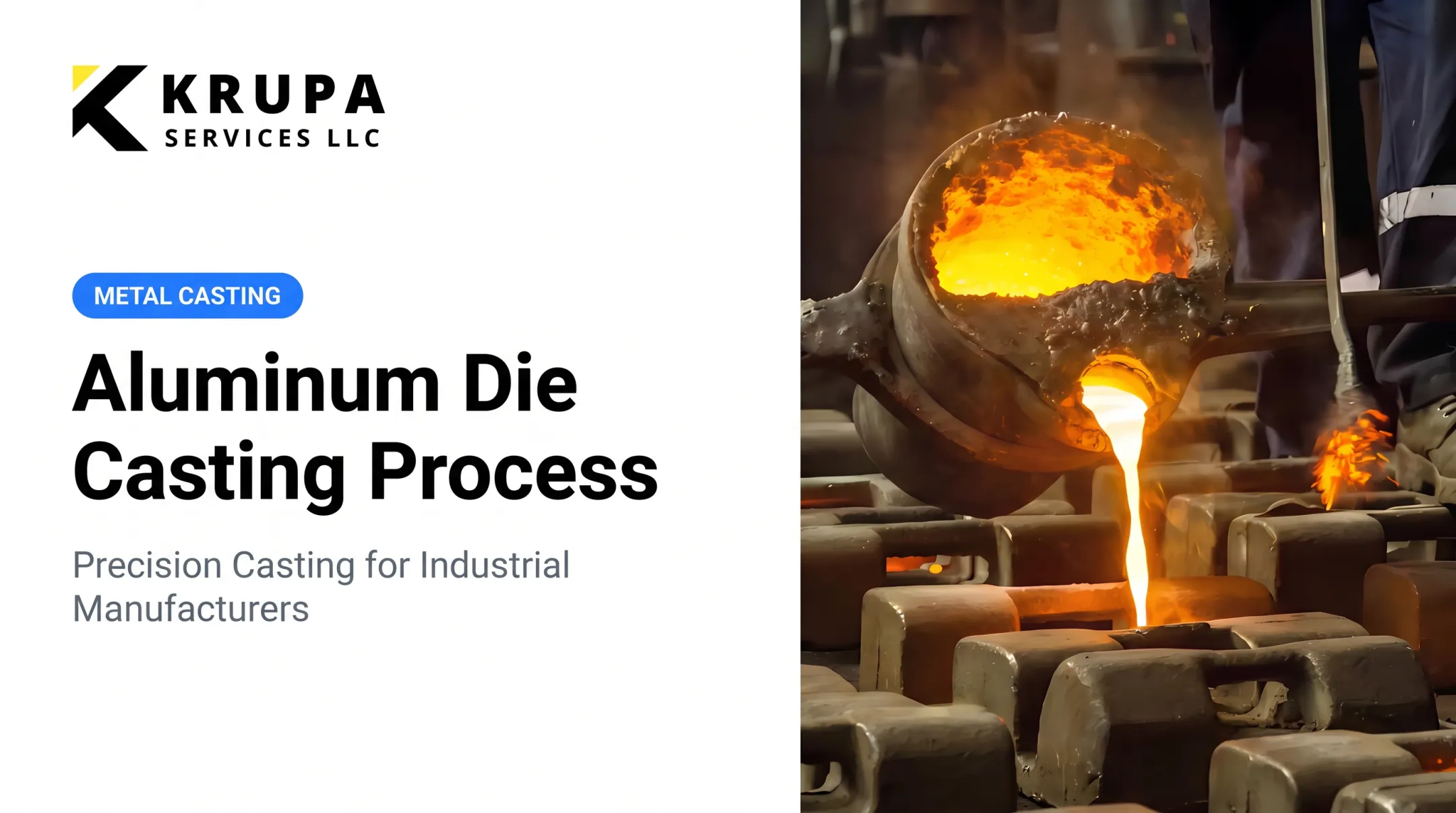
Die casting injects molten metal under pressure into a reusable steel die, then cools it rapidly to solidify the part. That high-pressure injection cycle is what NADCA ties to the process's dimensional consistency at scale.
It's built for high-volume, repeatable nonferrous parts such as aluminum, zinc, magnesium, and copper. Tooling investment is real, and design constraints (draft angles, wall thickness) need attention early.
Investment Casting
Investment casting builds a wax pattern, dips it repeatedly in ceramic slurry to form a shell, then removes the wax to leave a cavity mold. It's the go-to choice for intricate geometry and strong dimensional detail, though cycle times run longer than die casting.
For production work, Krupa Services' investment casting line covers automotive and industrial applications such as engine manifolds, transmission parts, brackets, covers, and housings. Materials include carbon steel, alloy steel, stainless steel, brass, and select nonferrous alloys.
Other Methods Worth Knowing
- Centrifugal casting — uses rotational force to distribute metal against mold walls, common for cylindrical parts
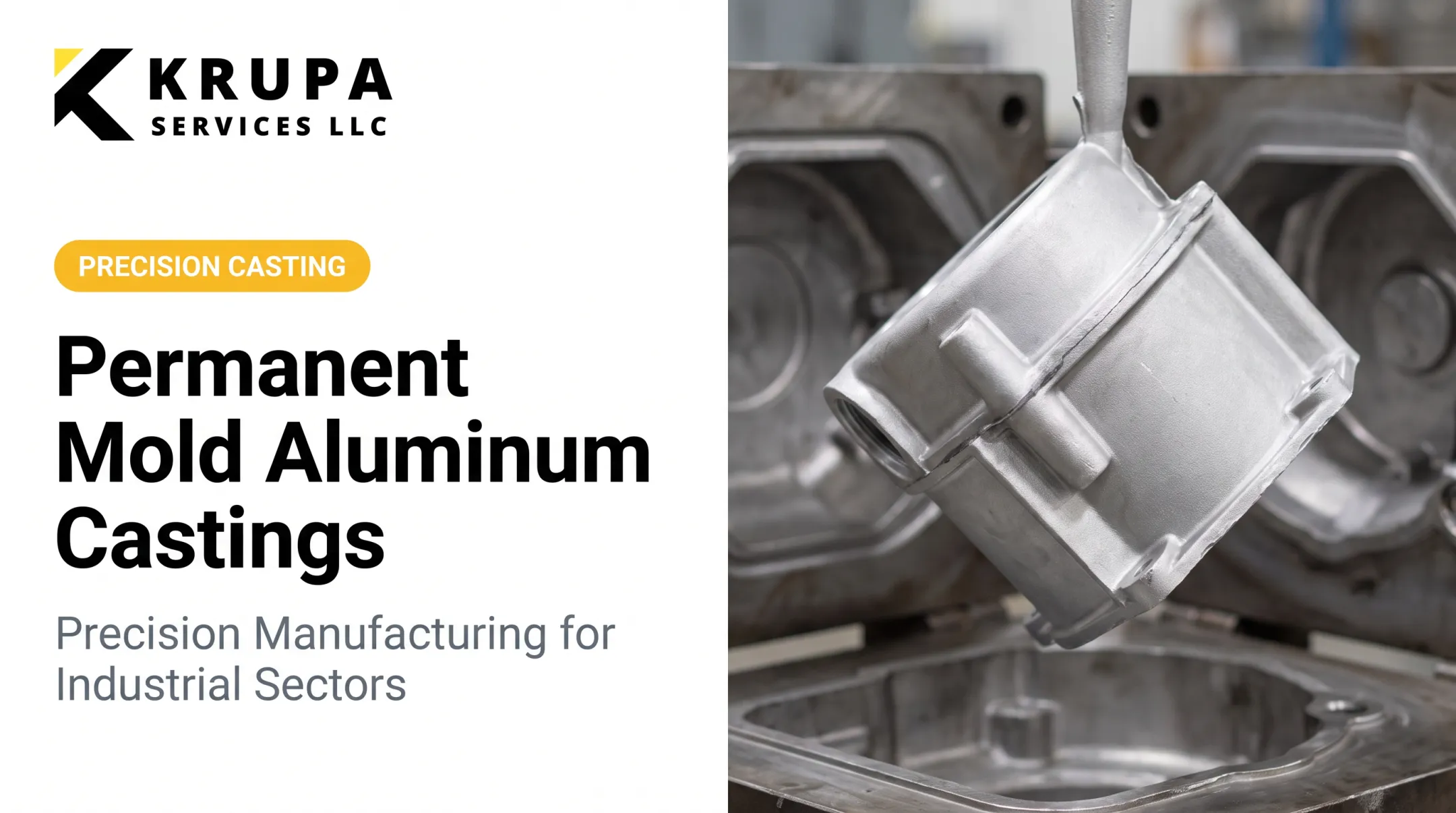
- Permanent mold casting — reusable metal molds without injection pressure
- Lost-foam casting — a foam pattern vaporizes as metal fills the mold
- Continuous casting — molten metal solidifies gradually as it moves through a mold, suited to long, uniform shapes
Comparing the Major Processes
| Process | Typical Materials | Best For | Tooling Investment |
|---|---|---|---|
| Sand casting | Iron, aluminum, steel, copper alloys | Large parts, complex shapes, lower volumes | Lower upfront |
| Die casting | Aluminum, zinc, magnesium, copper | High-volume nonferrous parts, tight repeatability | Higher upfront |
| Investment casting | Steel, stainless steel, brass, aluminum | Intricate detail, tight dimensional control | Moderate to high |
If your part has thin walls, sharp internal corners, uneven wall sections, enclosed cavities, or features that are hard to machine later, flag it for a manufacturability review before tooling gets cut.
Equipment, Materials, Quality, and Safety
A functioning casting plant runs on more than a furnace. Typical equipment includes:
- Furnaces and ladles for melting and transferring metal
- Molds, cores, patterns, or dies depending on the process
- Pouring systems and shakeout machinery
- Shot-blasting and heat-treatment equipment
- Machining centers for secondary operations
- Cranes and material-handling systems for heavy molds
Material Selection Drives Performance
Alloy choice shapes how a casting performs in service. Key properties include:
- Strength and hardness
- Wear and corrosion resistance
- Temperature tolerance
- Weight and machinability
A mining crusher housing needs different wear resistance than a fuel pump housing built for automotive service. Matching the alloy to the operating environment decides whether the part lasts or fails early.
Quality Controls to Expect
Reliable plants document their process from incoming material through shipment:
- Incoming material verification
- Process documentation at each production stage
- Dimensional and visual inspection
- Hardness testing and chemical analysis
- Non-destructive testing (radiographic, ultrasonic, or liquid penetrant, depending on the spec)
Relevant standards to reference in a purchase spec include ASTM A781/A781M for steel and alloy castings, ISO 8062-3 for dimensional tolerancing, and ISO 9001 for quality management systems. Confirm the current edition and acceptance criteria with the supplier before finalizing.

Krupa Services builds inspection and sampling into its investment casting workflow before shipment, and supports buyers with supplier audits, PPAP approval, and root cause analysis when specs require it.
Safety and Environmental Practices
Strong process control also depends on how the plant manages hazard exposure. Molten metal work is high risk. OSHA's PPE guidance specifically flags molten metals and hot surfaces as hazards requiring protective equipment selection after a formal hazard assessment. Beyond PPE, expect:
- Ventilation systems designed to keep fumes and dust out of work areas
- Waste management and byproduct recycling programs (foundry sand reuse is common)
- Energy-use monitoring
- Safe material-handling procedures for heavy molds and hot components
How to Evaluate a Casting Factory or Manufacturing Partner
Choosing a casting partner is less about finding the lowest quote and more about confirming they can execute reliably at your required volume. Use this checklist before you commit.
Prequalification Checklist
- Process and material experience — Have they cast this alloy and part type before?
- Production capacity — Can they scale with your volume without missing deadlines?
- Equipment and tooling ownership — Do they own the dies or tooling, or lease them?
- Engineering support — Will they flag manufacturability issues before production?
- Quality documentation — Do they provide inspection reports and traceability records?
What to Include in Your RFQ
A complete RFQ package should cover:
- Drawings or 3D files
- Material specifications
- Annual or batch volume requirements
- Tolerances and surface-finish expectations
- Testing and inspection requirements
- Packaging and delivery instructions
- Required secondary operations (machining, coating, assembly)
Before approving full production, ask for sample parts, first-article inspection reports, and a clear defect-handling procedure. Confirm who owns change-control decisions if a spec needs to shift mid-run.
Casting-Only vs. Broader Manufacturing Partner
Some suppliers do casting and nothing else. Others coordinate casting with machining, fabrication, welding assembly, finishing, packaging, and logistics, which reduces the number of vendors you manage.
Krupa Services falls in this second category. Casting is coordinated through its 100+ plant manufacturing network rather than a single in-house foundry, so confirm which capabilities apply to your project before you lock scope.
Casting coverage typically includes:
- Investment, sand, and die-cast processes
- Carbon steel, alloy steel, stainless steel, and select non-ferrous alloys
- Parts for automotive structures and powertrain, pump bodies, oil and gas equipment, aerospace, and mining and aggregate applications
Adjacent work often sits under the same coordination umbrella: CNC machining, laser cutting, forming, fabrication, welding assembly, and proprietary parts manufacturing.
That matters when a cast housing also needs machining and a welded bracket assembly. One point of contact cuts vendor-management overhead. RFQs typically receive a response within one business day, with technical consultation by phone or email.

Frequently Asked Questions
What is casting production?
Casting production shapes material by pouring molten metal into a mold, letting it solidify, removing the mold, and completing any required finishing and inspection steps. It's one of the oldest metal-forming methods still in wide industrial use today.
What is casting used for?
Casting produces components with complex shapes, internal cavities, or large dimensions that would be difficult or expensive to machine from solid stock. It's common for engine parts, housings, pump bodies, and structural machinery components.
What is die casting used for?
Die casting is used for high-volume, repeatable production of nonferrous parts—typically aluminum, zinc, or magnesium—where consistent dimensions and relatively smooth surfaces matter. It requires higher upfront tooling investment, so it works best at scale.
What are the three types of casting?
Sand casting, die casting, and investment casting are the three most widely discussed categories, though classification varies by source. Many additional processes exist, including centrifugal, permanent mold, lost-foam, and continuous casting.
How do casting plants ensure quality?
Reliable plants control materials and process parameters, then verify results through dimensional inspection, visual checks, and testing like hardness analysis or non-destructive testing. Documentation and traceability let them trace any defect back to its source.
How do I choose a casting factory?
Compare process experience with your specific material and part type, quality systems, production capacity, tooling and engineering support, and secondary-operation capabilities. Weigh total cost and delivery reliability together, not cost alone.